Two Spider-Men, Two Kinds of Heartbreak
Nothing in games feels quite like swinging through Insomniac's New York. Two Spider-Man games built on the best traversal I've played, where getting there is the whole point.
I've never read the comics. My Spider-Man started on a television when I was five, with Tobey Maguire's movies running on repeat until I practically had them memorized, all the way through Spider-Man 3. Later I found out you could download movies, and I kept going from there. Andrew Garfield's version, then Tom Holland showing up in Civil War. My Spider-Man was always the one on the screen, and I figured I knew this character about as well as anyone. Guy in a red suit, cracks jokes, saves the day, goes home sad. That's the shape of it.
Which brings me to why I am writing this now. Spider-Man: Brand New Day premiered yesterday, I was there for it, and I walked out wanting more Spider-Man than one movie could give me. So this week I went back to the two games that understand him best and wrote both up at once, a small double feature in appreciation of a character I never seem to get tired of.
Then Insomniac made two games back to back, and both of them stuck with me longer than I expected a superhero game to. The first one is about a friendship coming apart. The second is about a kid learning to do the job without the guy who taught it to him. Same New York, same web swinging, same "with great power" idea underneath, but they're after two different things.
I'm reviewing both here, because playing them together is the whole point. Do them in order if you can. It's worth it.
Two Masks, One City
Superhero games have a rough track record. For every good one there's a pile of movie tie in games where you punch the same three thugs across a gray warehouse. So when Insomniac announced a big budget Spider-Man exclusive, I was interested but keeping my expectations low.
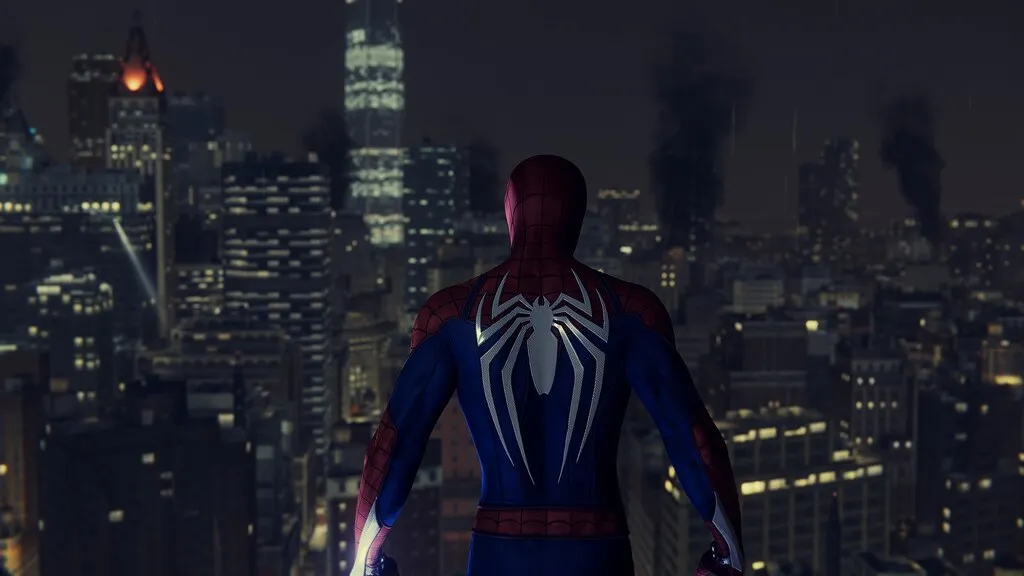
The thing they got right before anything else was the feeling of being Spider-Man instead of watching him. You leap off a skyscraper, the web catches at the last second, the city blurs past, and it just works. They built the whole game around that one mechanic and it carries the rest.
But the swinging is the hook, not the reason these games stayed with me. That comes down to the people under the masks. Peter Parker, older here, eight years into the job and tired in a way the movies rarely show. And Miles Morales, brand new at it, nervous, trying to fill a role that was never really built for him. Two guys, one city, learning a similar lesson from opposite ends of their lives.
Marvel's Spider-Man (2018)
The first game is the more complete package, and the writing is a big reason why. This is a Peter Parker eight years into the job, and the story leans into that maturity instead of running another origin. You feel it from the first hour: the game hands you a fully capable Spider-Man and spends its time on what the job costs him rather than whether he can do it.
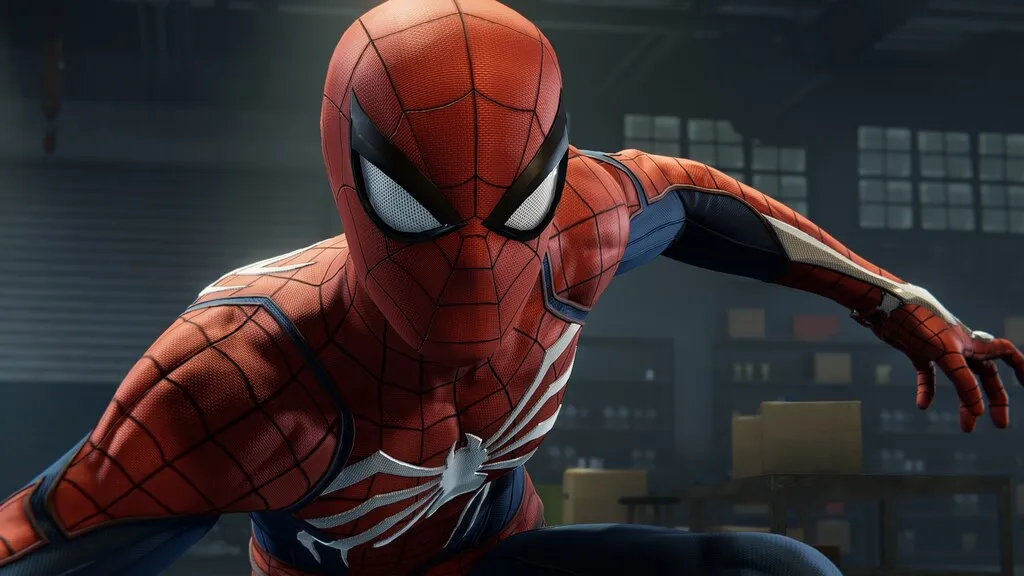
The smartest thing Insomniac does is keep the drama personal. The best villain here is not a costume, it is a mentor and friend you spend real hours with before the game turns him, so the reveal lands as a loss instead of a boss fight. That is the whole trick of the writing. A villain hurts more when you liked them first, and the game does the work to make you care before it twists the knife.
It also commits where a lot of superhero stories flinch. The back half drops the power fantasy and asks what a win actually costs, then follows through on a bleak ending it refuses to soften. I will not spoil it, but it is rare for a licensed game to trust you to sit with a loss instead of handing you a clean victory. It is not flawless. The plot leans on a few convenient tragedies, and the supervillain team up it builds toward is the least interesting thing in it. But the relationships carry it, and by the end it has earned the weight it reaches for.
Spider-Man: Miles Morales
Miles Morales is the shorter, tighter follow up, and it knows exactly what it is.
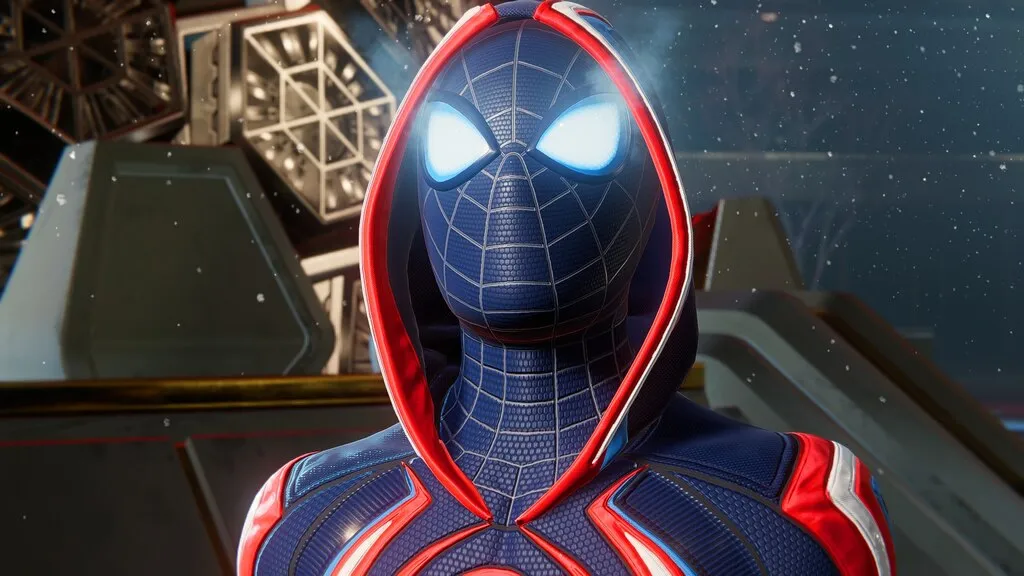
Where the first game goes big, this one goes small, trading the Manhattan skyline for a few blocks of Harlem that actually feel lived in. It is the better setting even though it is the smaller one, because it roots its hero in a real place and community instead of a generic city to save. The writing repeats the first game's best move, keeping the real conflict inside Miles's own circle rather than across the city, and it mostly works.
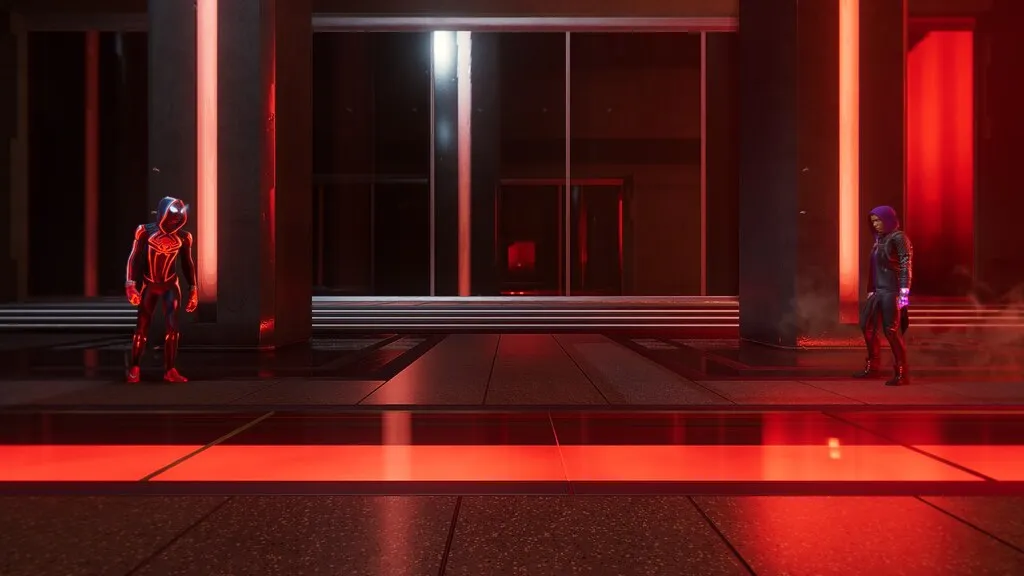
The catch is length. It is a coming of age story about stepping out of someone else's shadow, and when it sticks the landing it hits as hard as anything in the first game, but it wraps up fast. The villain could have used a few more hours to breathe, and you can feel the tighter budget in how quickly the big emotional turns arrive.
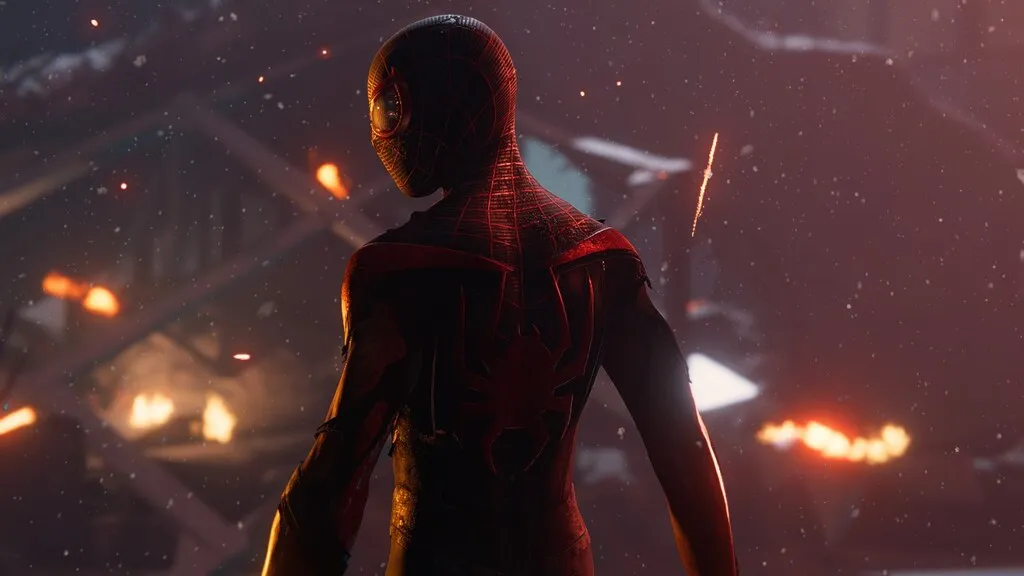
What keeps it from feeling like an expansion pack is Miles himself. His Venom powers and camouflage give his combat a different rhythm from Peter's gadget heavy style, enough that he plays like his own hero and not a reskin. By the end he has his own city, his own powers, and his own voice, and the game makes a real case that a follow up can be smaller without being lesser.
The Swing
I have to talk about the traversal, because it's the best I've played.
Swinging here follows real geometry. Your webs actually attach to buildings, momentum matters, and you can dive to build speed, launch out of the bottom of an arc, wall run, zip to a point, and chain all of it into a rhythm that feels like moving with the skyline instead of over it. I never once wanted a fast travel button, which is about the highest compliment I can pay an open world game. Getting there is the fun part.
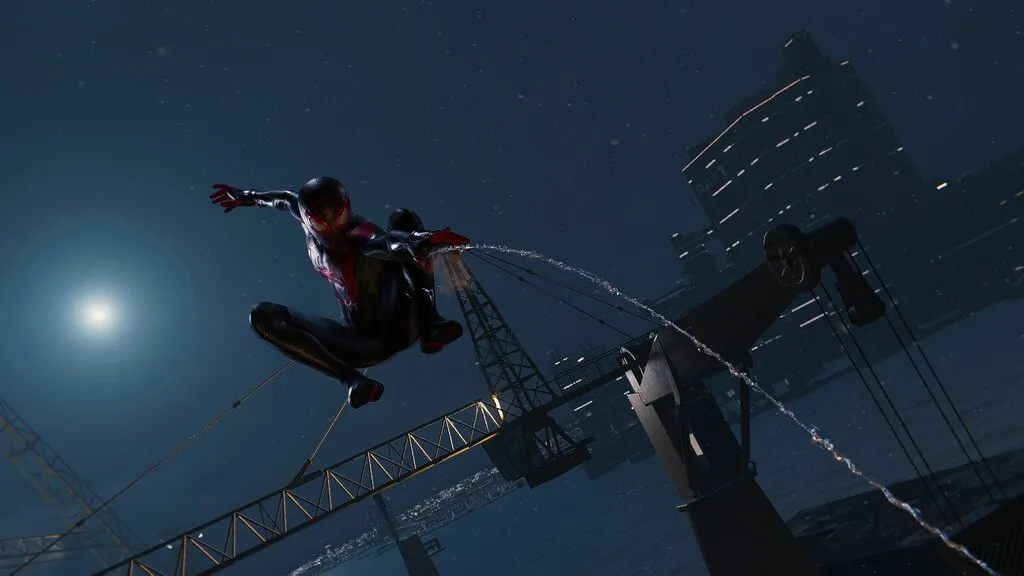
Miles adds a bit more flair to it, more tricks and flips and general showing off, and it suits him. Peter swings like someone who commutes this way every day. Miles swings like a kid who can't believe he's allowed to.
Combat
The combat is fast and acrobatic, built around dodging on the spider sense cue and stringing together air juggles, gadgets, and web tricks to keep crowds off you. Chaining combos wasn't a new language for me. I grew up working them out in Mortal Kombat: Shaolin Monks on the PS2, so learning strings and linking them together felt familiar from the first fight rather than intimidating.
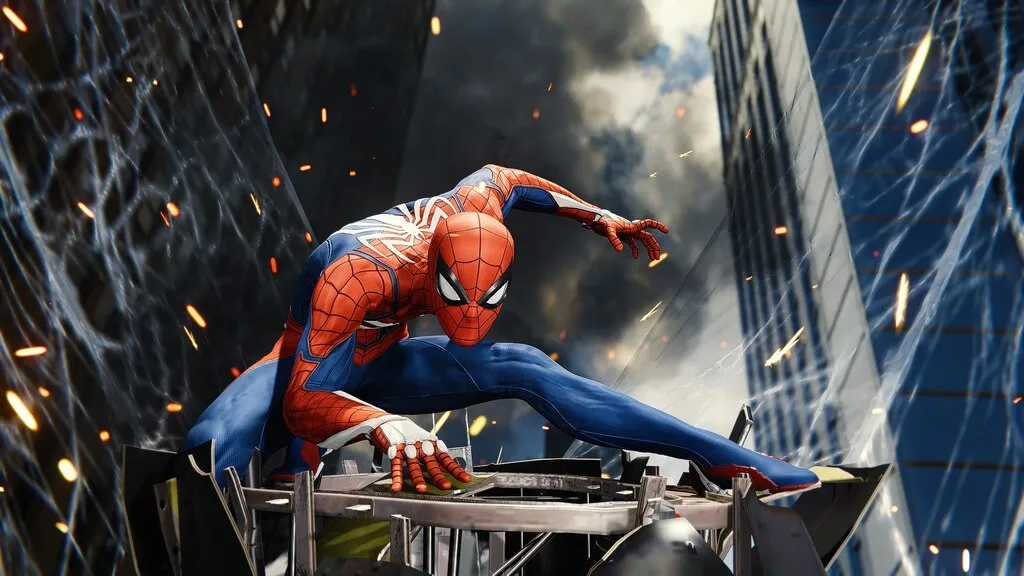
Peter leans on his gadget arsenal, the web bombs and trip mines and suit powers you unlock as you go. Miles trades some of that for his Venom abilities and camouflage, so his fights feel more improvised and physical. Peter plays like a tactician, Miles like he's running on instinct, and even the way each of them throws a punch tells you something about who they are.
The gadget layer is where it opens up. Web bombs, trip mines, the impact hammer, electric webs, each one is a tool for controlling a fight rather than just more damage, and the fun is in chaining them, yanking someone into the air, pinning them to a wall, then zipping in to finish the job before they drop. Suit powers add another button of chaos on a cooldown. On the higher difficulties none of this is optional. Spectacular is how the game wants to be played, where you have to rotate through the whole kit instead of leaning on one combo, and it is the setting that finally made the systems click for me.
The boss fights are Insomniac showing off, and most of them earn it. The first game builds toward a run of set pieces that keep raising the stakes, and its finale lands as much on story as on mechanics. Not all of them are deep, a few are just big and loud, but the best ones make you use everything the game taught you. Miles has a smaller roster that leans harder on spectacle than challenge, yet the flow and the choreography stay a cut above what most action games manage.
Where it loses me a little is the back half. By the late game the combat gets repetitive, and it can genuinely start to wear on you. You settle into a couple of reliable combos and end up mostly mashing one button through fights you already know you're going to win. The enemy variety doesn't keep pace with how good you get, so the same squads of Sable agents and Underground goons come back on rotation and stop putting up any real resistance. It's still fun to control. It just stops surprising you, and by the end a few of the bigger arenas felt more like a chore than a highlight. Another pass on the enemy roster, or something to keep forcing you to actually engage, would have gone a long way.
Suits and Progression
The suit collection is one of the quiet joys. Both games hand you dozens of suits pulled from decades of comics, the movies, and original designs, and the best decision Insomniac made was letting you run any suit power with any look. You never have to pick fashion over function, so you can swing around in whatever you think looks coolest and still bring the ability you want into a fight.
Underneath that is a light RPG layer that mostly knows its place. You spend tokens earned from side activities on gadget upgrades and suit mods, and you pour skill points into a few branches that shape how you fight. It is not deep, but it is well judged. The upgrades are meaningful enough that clearing a district actually pays off, and the systems never get in the way of the part you came for. Miles adds his own suits and his Venom and camouflage trees, which give his progression a different shape from Peter's.
The catch is the token economy. By the back half you are drowning in currencies, and once you have unlocked most of the tree the progression flattens into busywork. It is a small complaint, but it is the point where the open world padding and the upgrade grind start feeding each other.
New York
The city does a lot of the work. Insomniac's Manhattan is dense and full of detail, and on the PC port, with the settings pushed up, the reflections in all that glass turn the skyline into something you're flying through rather than past. Miles Morales especially, set over a snowy Christmas, is one of the better looking games I've played. Harlem under snow and holiday lights has a warmth the first game's colder, bigger Manhattan doesn't really reach for.
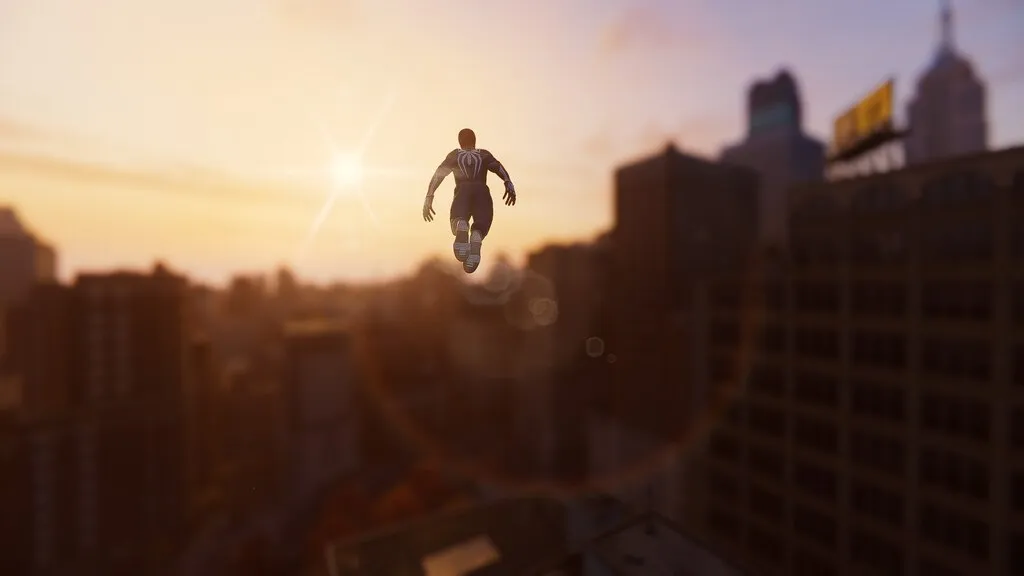
The photo mode is dangerous, too. I lost more hours to it than I'd like to admit.
One gripe, and it comes from playing the PC port, which is built on the remaster: they changed Peter's face. The original PS4 model looked older and a little more worn, more like a guy who has been doing this for eight years. The face they swapped in for the remaster looks younger and smoother, and to me it suits the character less. It's a small thing and I got used to it, but every now and then a cutscene would catch me and I'd miss the old Peter.
Music
John Paesano's score for the first game gives Peter a proper heroic theme, the kind of brass that makes a rooftop leap feel like it matters. It does its job well.
Miles Morales is where the sound really finds its own identity. The soundtrack leans into hip hop and pulls from Miles's culture directly, and it makes his corner of New York feel like his. Peter gets the orchestra, Miles gets the beat, and both fit the person wearing the mask.
Voice Acting and Presentation
The performances carry more of these games than they get credit for. Yuri Lowenthal is one of the best Spider-Men I have heard, landing the quips without losing the weight underneath, and he sells the tired, older Peter better than the writing alone could. Nadji Jeter gives Miles a warmth and a nervous energy that make him feel his age, so the shift between the two never reads as the same hero in a different suit. The supporting cast holds up too, all the way down to the villains.
The presentation around them is straight AAA. The facial capture is expressive enough to carry the quiet scenes, the cutscenes flow in and out of gameplay without a hard seam, and the constant banter while you swing and fight keeps the characters alive in the stretches between missions. It is the kind of polish that is easy to take for granted until you play something that does not have it.
Where It Stumbles
Neither game is flawless, and it's worth being honest about that.
The open world falls into some familiar habits. Towers to clear the map, collectible backpacks, crimes in progress that loop. None of it is bad, and the swinging makes even the filler pleasant, but it's the least imaginative part of both games.
The forced stealth sections are the low point. In the first game you sometimes play as MJ or Miles sneaking past armed guards with no powers, where getting spotted means an instant restart. I get the intent, giving the pace some variety and letting you see the world from another angle, but in practice I groaned every time one started. They pull you out of the thing the game is best at to do the thing it's worst at.
And as I said, the combat runs out of new ideas before the ending, which keeps it from being a great system rather than just a good one.
Conclusion: Two Sides of the Same Promise
Play them together. That's the real recommendation. On their own, the first is a strong superhero game and Miles Morales is a strong, shorter game right after it. Back to back, they add up to one story about what this character means.
If you only have time for one, make it the first game. It is the fuller experience, the better combat sandbox, and the stronger story. Miles Morales is the encore, shorter and lighter, and it earns its place more as a companion than a headliner. Neither one reinvents the open world action template, but both execute it better than almost anyone else has.
I came in expecting to swing around a good looking city and punch some bad guys. I did do that, and it felt great. But I stayed for two young men learning the same hard lesson a generation apart, and I finished both games a little quieter than I started them.
Insomniac took the most adapted superhero there is and still found something worth saying about him, twice over. That counts for a lot.
"When you help someone, you help everyone."
And that would have been the end of it, until I realized Spider-Man 2 had already released on Steam. So that is where I am now, working my way through it for myself.